High-level round table on the working conditions of artists and cultural workers
Description de l'article de blog :
12/11/20253 min read
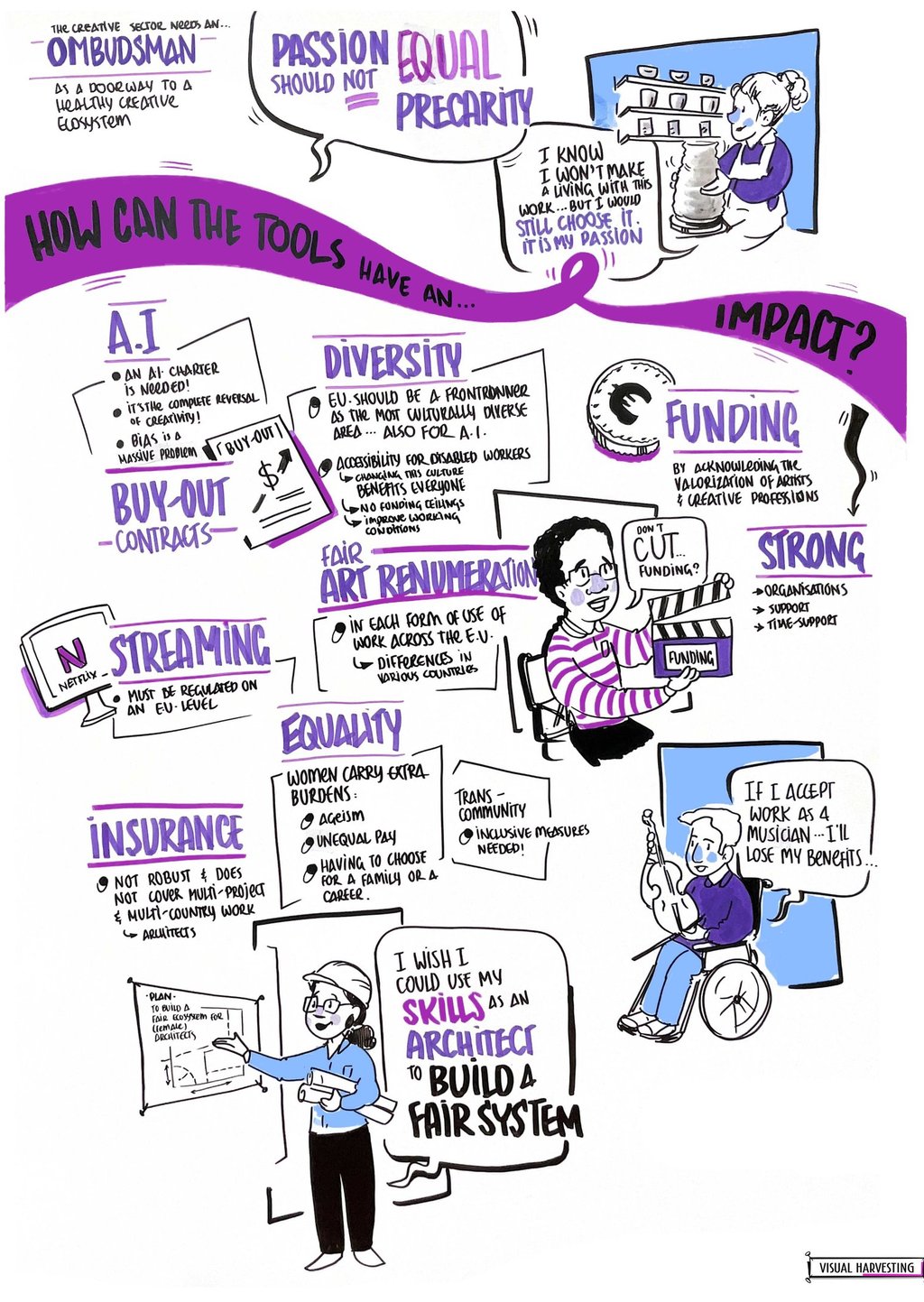
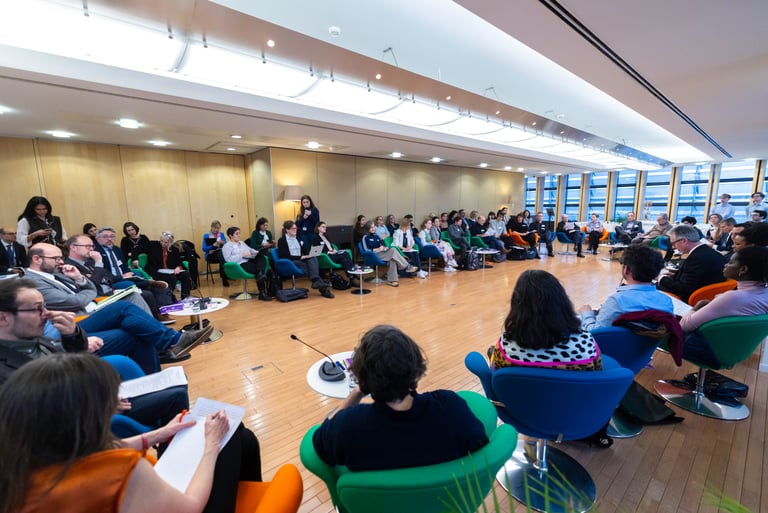
In attendance were more than 20 European organisations, representing all sorts of creative professions from writers to performing artists, from directors and architects to composers, conservator-restorers, visual artists, translators and many more. This demonstrated the variety of talents and skills across Europe when it comes to art and culture. Though we were all different, we shared at least two things: passion for what we do, and many difficulties plying our trade. These difficulties involve invisible work, idle time, difficult access to social protection and training, remuneration lower than actual minimum wages, collective bargaining (still illegal in many countries), lack of harmonisation (as is the case regarding authors’ rights for audiovisual translators), and of course, all-pervasive generative artificial intelligence.
European institutions have been working for some time to identify these problems. Some tools already exist, like the guidelines on collective agreements for solo self-employed people. Our stance was hands-on. The fact is, individual artists and authors, and sometimes even organisations, are far removed from all this precious information, all the initiatives and resolutions issued at the European level. So how can they have an impact? How do we connect the dots between individuals and the European institutions? We need strong intermediaries – robust organisations like AVTE. But let’s face it, associations that defend the rights of freelance artists operate on meagre funds and rely on volunteer work. This means time taken away from our daily work, from our families and personal lives.
Therefore, we have three points to make:
-We need strong support from European institutions to travel, to meet, to organise workshops, to disseminate all the relevant information, to launch studies, to lobby. The kind of support that is not tied to any particular project and can alleviate our burden and simply allow us to function. We especially need extra legal protection in our field, where our clients are often globalized companies that have their seat outside Europe.
- We need in-depth specialised workshops to teach us how to navigate the complex world of European institutions.
- And above all, we need an ombudsperson, a mediator or a coordinator, an office that would serve as a communication interface between all kinds of European artists’ and authors’ organisations and the European institutions. Our needs are manifold, spanning legislative and intellectual property rights, collective bargaining questions, and much more. We need to know whose door to knock on!
Crédit illustration : Iris Maertens
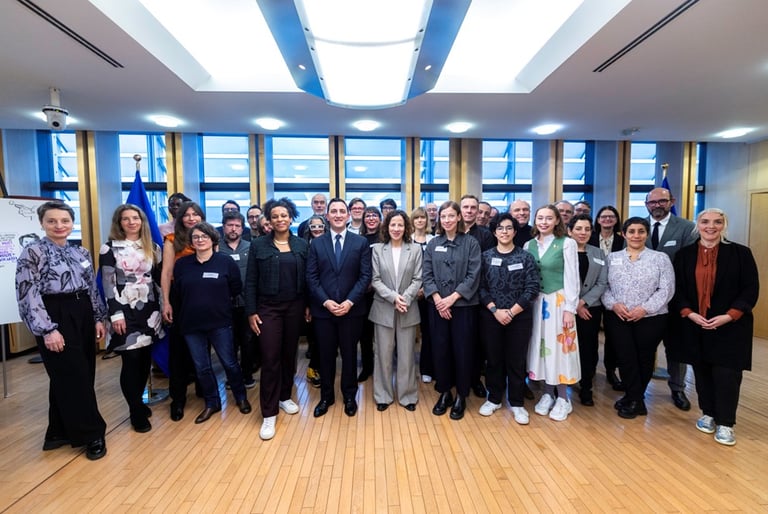
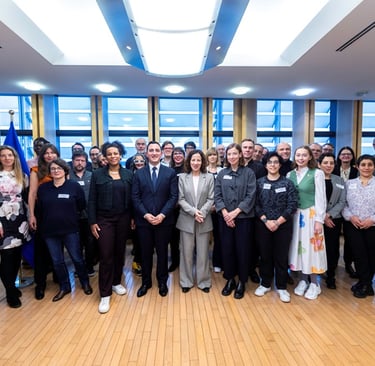
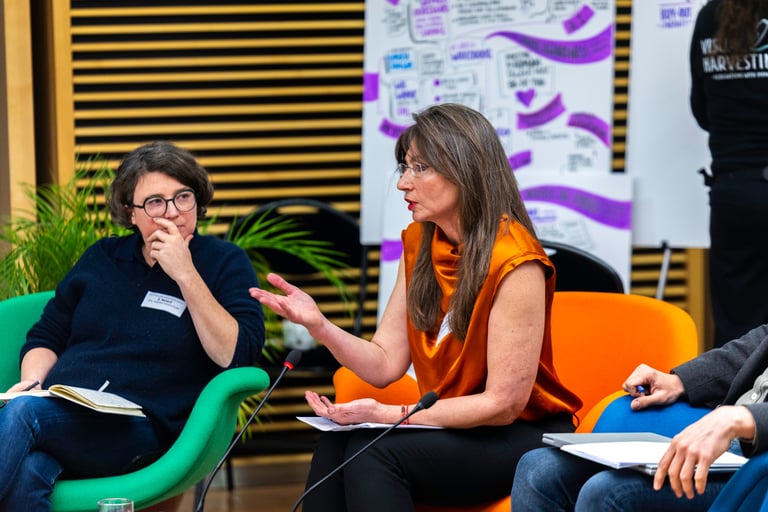
On 8 December 2025, AVTE was present at the high-level roundtable on artists’ working conditions, represented by its co-secretary, Estelle Renard.
Many thanks to the European Commission for the opportunity to speak on behalf of audiovisual translators, to the very attentive ears of Roxana Mînzatu, Executive Vice-President for Social Rights and Skills, Quality Jobs and Preparedness; Glenn Micallef, Commissioner for Intergenerational Fairness, Youth, Culture and Sport; and European Parliament Committee Chairs Li Andersson (Employment and Social Affairs) and Nela Riehl (Culture and Education)!
Regarding what we need for a resilient cultural ecosystem in Europe, we asserted that no such ecosystem can exist in our field of media translation as long as generative artificial intelligence is imposed on us. A recent study by Ana Guerberof shows that in translation work – and even more so in creative translation work – AI is the converse of creativity. The machine serves us pre-translated text, which we have to “correct”. This type of correction, called “post-editing”, is the most brain-numbing, the most draining of tasks, and it pays half the (already low) remuneration. The Commission, perhaps unknowingly, has been fostering this degradation of translators by funding ARTE in six languages, which requires the implementation of workflows including AI. The result: subtitlers’ remuneration has been crushed, divided by two.
If our aim is to defend a resilient, healthy ecosystem, we must invest in people, in talent, in diversity, and not gamble on Large Language Models – which are, as a plethora of studies now show, irremediably and dangerously biased, and the very antithesis of cultural diversity.
Yet last Monday, on the fabled 13th floor of the Berlaymont building, we worked together to start building a better future for artists, authors and creative workers. And this is only the beginning!